Impressions of a Quake’s Aftermath
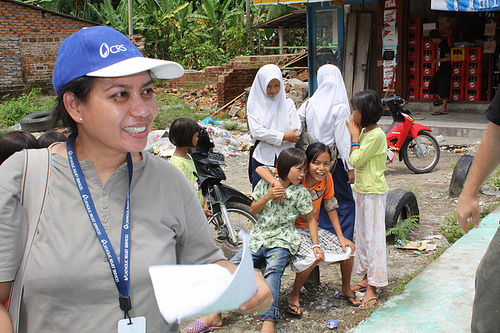
A Catholic Relief Services worker in Indonesia
I’m an information officer for Catholic Relief Services in Asia. This past month, we’ve had our hands full keeping up with the string of natural disasters that has hit the region. From my home base in Cambodia, I was sent to the Philippines to cover our response to severe flooding; then an earthquake hit Sumatra — one of the islands that make up Indonesia, so I caught a plane to Padang, the city closet to the quake’s epicenter.
I was new to extreme quake damage — its dangers and surprises. The first week of any emergency is usually the toughest; I’ve recorded my impressions of the experience.
Day One
The first sign of trouble is at the airport in Padang, Indonesia: there’s no water in the bathrooms; only big trash cans full of water outside their doors. I skirt the pungent restrooms and grab a taxi.
Driving through the dark — most of the city doesn’t have electricity — it’s hard to tell that a 7.6-magnitude earthquake struck three days ago. The outlines of the buildings look pretty normal, except for, say, every tenth building, which has collapsed. But as we cross a bridge I see an unsettling gash in the pavement. My unspoken question — This thing is stable, right? — will occur with increasing frequency as the days pass.
I arrive at a makeshift compound used by Catholic Relief Services and its partners in Caritas, the worldwide network of Catholic aid agencies. This base for our relief operations is made up of two buildings loaned to us by the Diocese of Padang: one an old, wooden building that might have been used as a Sunday school, to judge from the child-size desks in it; the other a small concrete-and-bricks office building.
In the darkness, I fumble for my keychain flashlight and greet my colleagues — mostly Indonesian CRS staffers, with several Europeans from Caritas.
A young IT wiz named Feri has miraculously hooked us up with an internet connection. It’s late at night, but he’s still here. Turns out he’s staying: his family’s house has collapsed, and about eight of them are sleeping on the floor of the wooden building, on big plastic political posters from a recent election. I talk to one of them, 22-year-old Siska, about the quake; she was baking a cake when it hit. “It was hard to run because the earth kept swaying,” Siska says. Her grandmother, 72-year-old Cecilia, was at a funeral when the quake struck. “I ran out into the street, but it shook and I fell,” she says.
I talk to Ayu, a 17-year-old student who knows a little English, but has no words for the quake. I ask her about her house, and she tents her fingers, then flattens them. “Gone.”Nearby, at small desks illuminated by a few generator-powered bulbs, the CRS-Caritas team is planning the next day’s work. We’re going up north to see rural villages that have been hit; most of the world has been paying attention to the city, but the villages are in worse shape.
Many hotels in the city have been damaged or destroyed by the quake, so the aid workers sleep at the compound. I take one of the blankets on offer and stake out a corner in the office building. There are no mattresses, but the tile floor seems clean, and I brought a tiny inflatable pillow. Sleep proves difficult amid the snores of my European brethren.
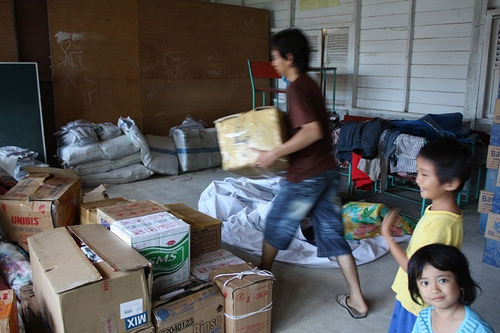
In the middle of the night, a more deafening noise wakes us up. It’s a huge truck unloading something. In the morning we find that someone’s donated hundreds of cases of drinking water, which are now piled up in the wooden building. Clean water: I can’t think of a better reason to be woken up.
Day Two
I get up and fold my blanket, noticing with some qualms the pronounced crack in the wall by my little corner. The latrine’s bulb is out; the available light is dim, and of course there’s no running water — many of the city’s pipes were broken. I do the best I can with a bucket shower. When a creature jumps on my leg and scuttles down my foot, I hope it’s just a large cockroach, not something worse. Funny how hopes are readjusted the more time you spend in disaster areas.
In the daylight, I see the building I slept in has a large crack running straight down its side, with a few small chunks of rubble on the ground near it. CRS is exceptionally good about not sending its people to an early death, but I feel the need to know more. I approach a Caritas Germany staffer who claims he’s “not an expert,” but explains in thorough detail how diagonal cracks are the danger, whereas vertical and horizontal cracks generally are not as great a worry. He also shows me how the building is reinforced with a certain kind of iron, and mentions a few other reassuring-sounding technical terms.
Comforted, I head to the wooden building, where we do work. Cecilia and her family — church members trusted by the diocese — are kindly cooking breakfast. The CRS-Caritas group divides up and we head to the northern villages.
By daylight, the cityscape is like an Escher drawing, a kind of weird optical illusion. The buildings look normal — don’t they? But wait, is that roof slanted down? And is that house tilted? Gradually you realize you’re eyes aren’t playing tricks on you; hundreds of buildings, while still standing, are badly damaged and askew.
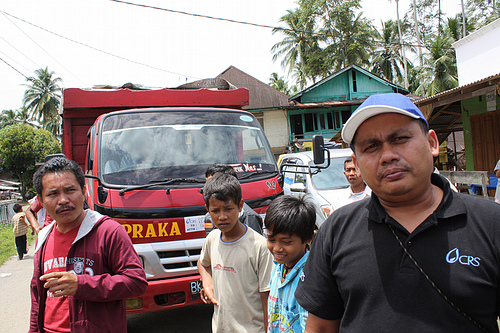
We drive for hours, and briefly get lost — many of these villages aren’t on regular maps. We pass villages where not one in ten, but four out of every five houses show severe damage. Families sit in their yards, afraid to go back into the dangerous skeletons of their houses.
First stop at many villages is the local town council, which has the information on all the families in town and who’s been affected. While my colleagues talk to the village leader, I talk to Ayu, a 17-year-old student who knows a little English, but has no words for the quake. I ask her about her house, and she tents her fingers, then flattens them. “Gone.”
Day Three
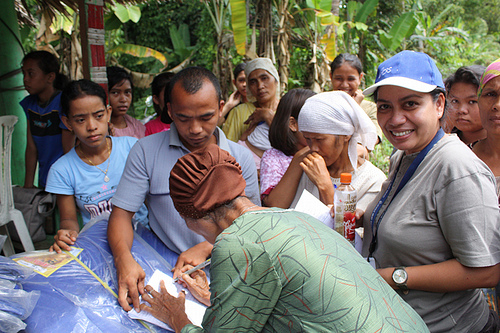
I work on contacting the press while my colleagues deal with trucking, airplane, and other shipping issues. Sixteen hundred thick blue CRS tarps have arrived at our compound, and thousands more are on the way, but coordinating with the airport takes some time. Tarps are one of the first lines of defense after an earthquake — survivors can use them along with salvaged house parts to create temporary shelters. Given the occasional heavy rain, it’s best to have some sort of protection rather than sleep entirely outdoors, as most of the survivors have been doing. Some villagers are reporting fevers and respiratory problems from sleeping outside.
In the evening, rumors float around that certain bottom-of-the-barrel hotels in the city have a room or two. No running water, mind you, and certainly no AC — because they’re on generators — but they would have mattresses. I get a grungy room to share with several other female colleagues. An Indonesian notes that it’s good we’re on the third floor of a three-story walkup: in a quake, she says, “The second floor is the sandwich floor.”
Day Four
The compound’s been hooked up with more generator electricity and an outdoor bucket-shower area — the benefit of being with aid workers is that they know how to set this stuff up fast.
We have an early morning meeting and break into groups again. It’s back to the field to distribute the first wave of tarps. We drive on decent roads through jungle-like vegetation, huge palm trees towering over us. Chickens peck amid coconut shells and quake debris; the occasional monkey appears. Karaoke is apparently big in Indonesia, and our driver sings along tunefully to a disc he’s brought. When it starts playing Mr. Big’s cover of “Wild World,” everyone in the car — Indonesian, Australian, American — joins in. With “remember there’s a lot of bad” and Fergie’s “time to be a big girl now” that follows, the songs seem strangely apropos.
[For the rest of the week, click the link for page 2 below the images.]
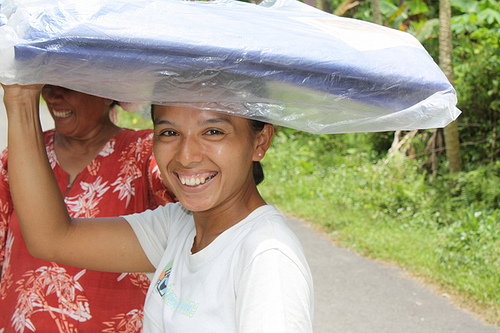
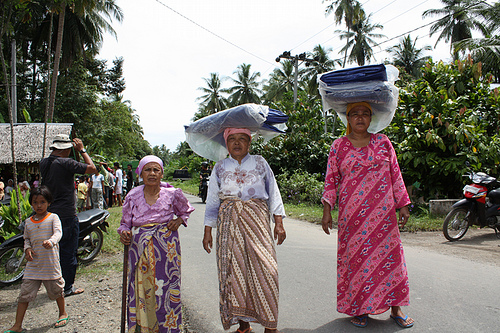
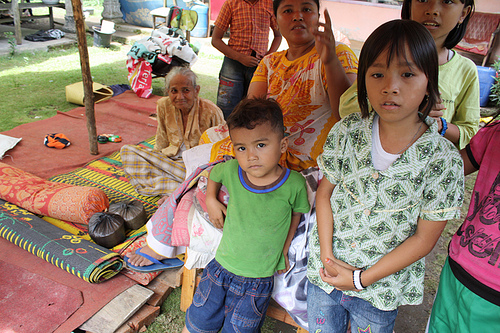
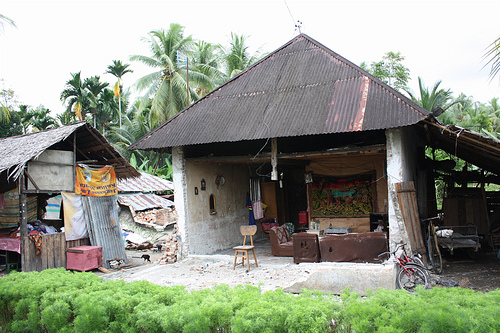
- The Indonesian village of Lurah Ampalu, where hundreds of homes were severely damaged or destroyed by a 7.6-magnitude earthquake.Staff from Caritas Germany, Switzerland, Austria, Ireland, Australia, France, USA and more--some of whom live in Indonesia--arrived quickly in Padang, a city in the south of the Indonesian island of Sumatra, and went to villages to assess needs. On Oct 6, they returned to Lurah Ampalu to distribute 1600 tarps, which will be used for temporary shelters. The tarps are the first part of the Caritas shelter response.
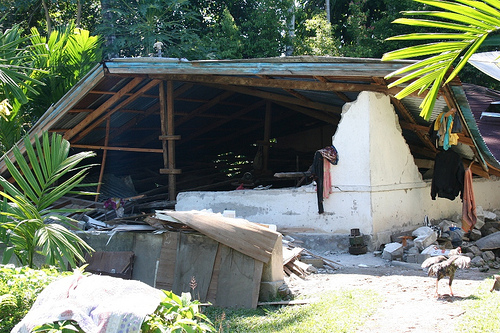
- Indonesian villages in and around Alung, where hundreds of homes were severely damaged or destroyed by a 7.6-magnitude earthquake.Staff from Caritas Germany, Switzerland, Austria, Ireland, Australia, France, USA and more--some of whom live in Indonesia--arrived quickly in Padang, a city in the south of the Indonesian island of Sumatra, and went to villages to assess needs. On Oct 7, they assessed villages in Alung, finding that many villages had already started building temporary shelters using salvaged wood and sheet metal.CRS had earlier distributed 1595 tarps, which villagers are using to improve their temporary shelters. Tarps are often used as roofs.
- The Indonesian village of Lurah Ampalu, where hundreds of homes were severely damaged or destroyed by a 7.6-magnitude earthquake.Staff from Caritas Germany, Switzerland, Austria, Ireland, Australia, France, USA and more--some of whom live in Indonesia--arrived quickly in Padang, a city in the south of the Indonesian island of Sumatra, and went to villages to assess needs. On Oct 6, they returned to Lurah Ampalu to distribute 1600 tarps, which will be used for temporary shelters. The tarps are the first part of the Caritas shelter response.
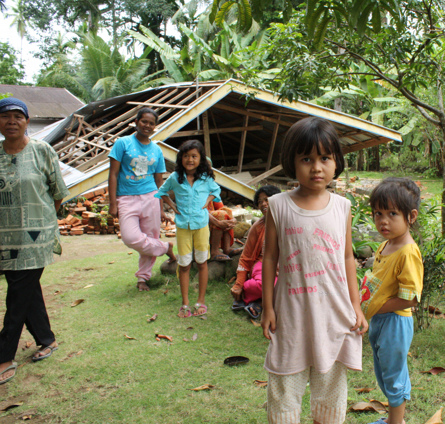
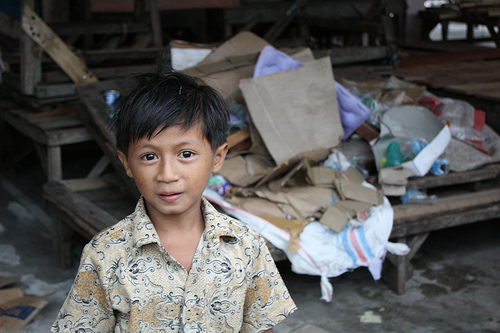
- Children near destroyed buildings and debris caused by the Sumatra earthquake of Sept. 30 2009. This town is about 3 hours outside of Padang.Staff from Caritas Germany, Switzerland, Austria, Ireland, Australia, France, USA and more--some of whom live in Indonesia--arrived quickly in Padang, a city in the south of the Indonesian island of Sumatra. On Oct 3-4, they visited villages outside Padang, going to villagers and asking them what they need. Temporary shelter was one top need.
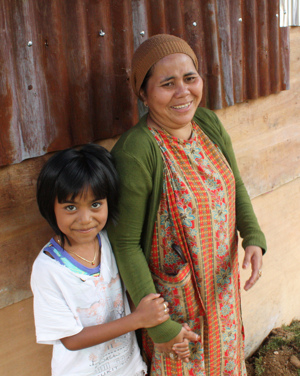
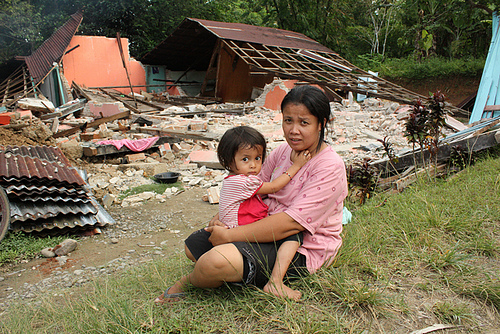
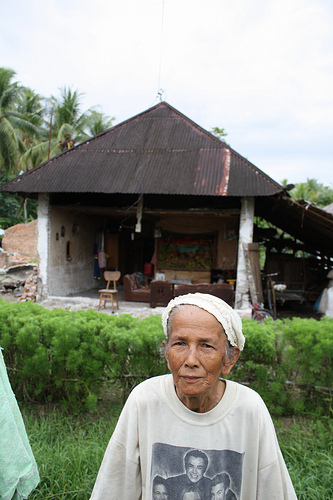
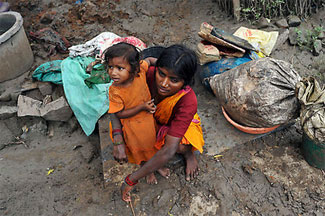
- Woman standing near a home that was destroyed during the Sumatra earthquake of Sept. 30 2009. Her town is about 3 hours outside of Padang.Staff from Caritas Germany, Switzerland, Austria, Ireland, Australia, France, USA and more--some of whom live in Indonesia--arrived quickly in Padang, a city in the south of the Indonesian island of Sumatra. On Oct 3-4, they visited villages outside Padang, going to villagers and asking them what they need. Temporary shelter was one top need.
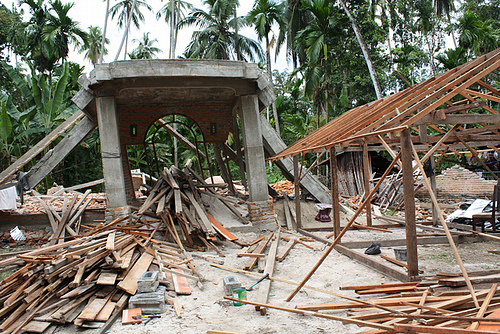
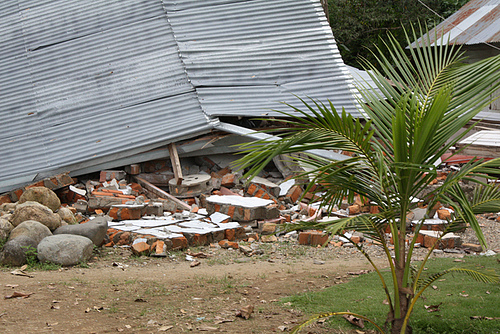
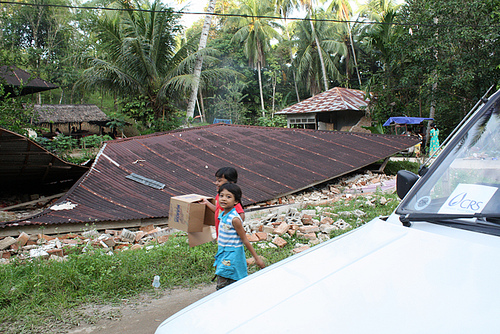
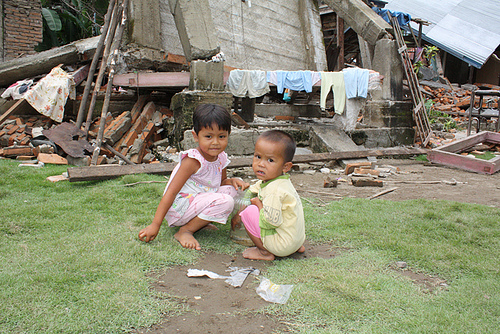
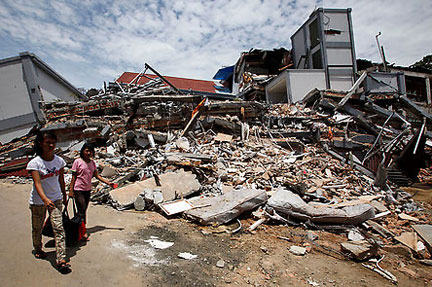
- Destroyed buildings and debris caused by the Sumatra earthquake of Sept. 30 2009. This town is about 3 hours outside of Padang.Staff from Caritas Germany, Switzerland, Austria, Ireland, Australia, France, USA and more--some of whom live in Indonesia--arrived quickly in Padang, a city in the south of the Indonesian island of Sumatra. On Oct 3-4, they visited villages outside Padang, going to villagers and asking them what they need. Temporary shelter was one top need.
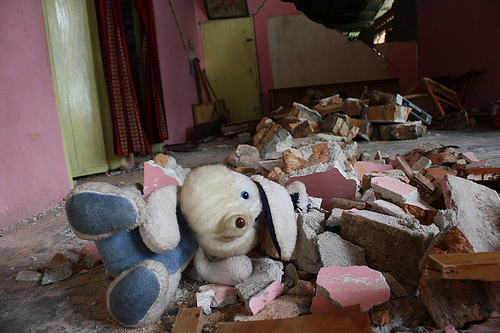
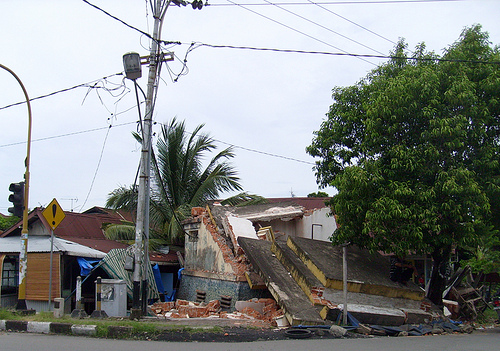
- Damaged building in Padang, Indonesia, following a deadly quake on Sept. 30, 2009 Photo: Eloi Bonal/Secours Catholique (Caritas France)
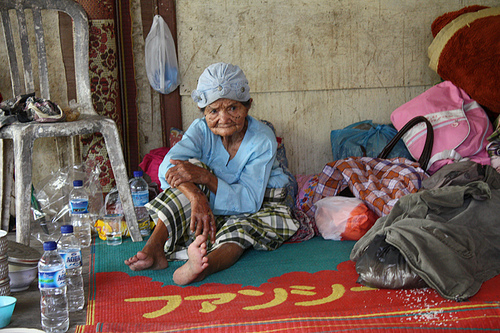
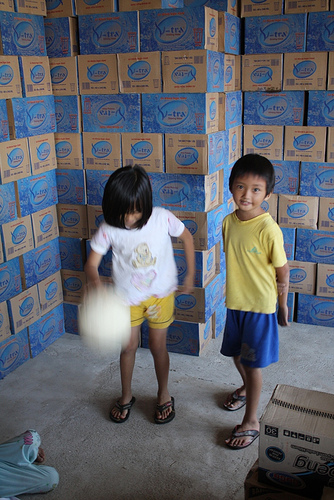
- Victoria and Fedro, who with their families fled their home during the Sumatra earthquake of Sept. 30 2009, play with a ball near a tower of donated water in a makeshift CRS/Caritas compound in Padang. The children and their families are now sleeping on the concrete floor of this building, which has been opened to them and to aid workers by the local Catholic church. Photo: Laura Sheahen/CRSStaff from Caritas Germany, Switzerland, Austria, Ireland, Australia, France, USA and more--some of whom live in Indonesia--arrived quickly in Padang, a city in the south of the Indonesian island of Sumatra. On Saturday Oct 3, they visited villages two hours from the city of Padang, going to villagers and asking them what they need.
Pages: 1 2


Please note that the editorial staff reserves the right to not post comments it deems to be inappropriate and/or malicious in nature, as well as edit comments for length, clarity and fairness.